

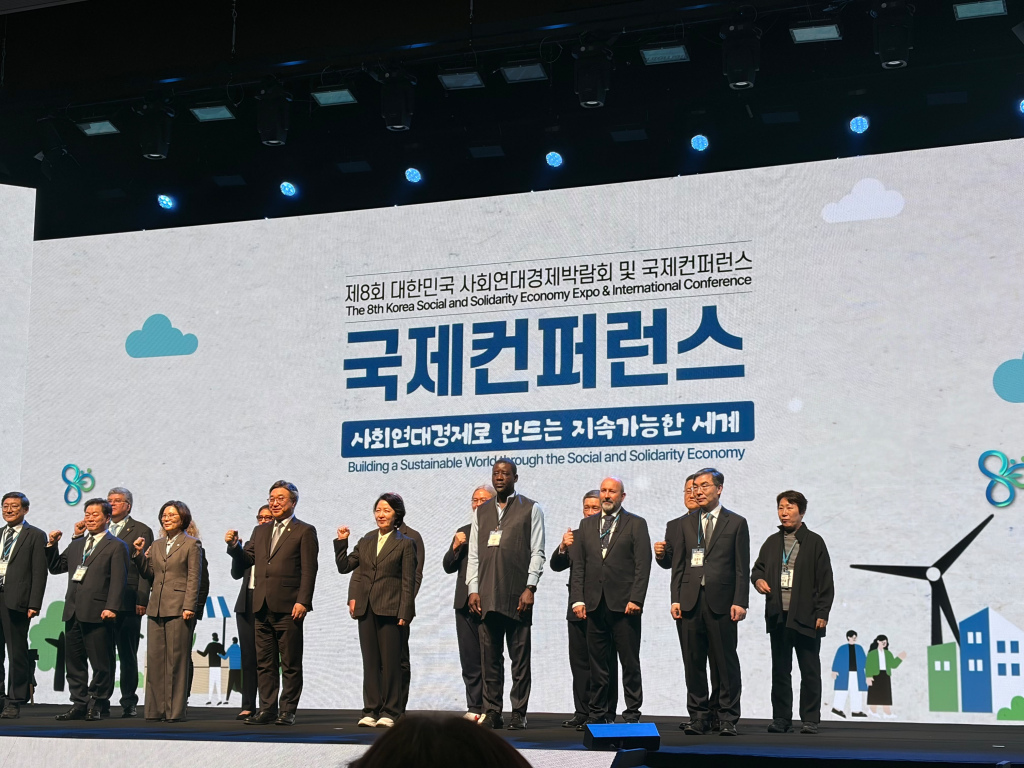
The city of Goyang, Republic of Korea, is hosting the GSEF Asia Policy Dialogue 2026 on Friday, 27 November, bringing together institutional representatives, local governments, international organisations, experts and social and solidarity economy practitioners to discuss the contribution of the Social and Solidarity Economy (SSE) to more sustainable, inclusive and resilient local economic development.
Held in the framework of the Korea Social and Solidarity Economy Expo 2026, the event is organised by the Association of Korean Local Governments for Social and Solidarity Economy (SSEGOV), which chairs the Asian continental chapter of the Global Social Economy Forum (GSEF), and the Ministry of the Interior and Safety of the Republic of Korea (MOIS), in cooperation with GSEF.
Under the theme Building sustainable local futures through the Social and Solidarity Economy, the dialogue explored the role of the SSE as a driver of territorial transformation, its contribution to the Sustainable Development Goals (SDGs), and its capacity to address current economic and social challenges while strengthening communities at the local level.
The Intercontinental Network for the Promotion of Social Solidarity Economy (RIPESS) and the Andalusian Fund of Municipalities for International Solidarity (FAMSI), both members of the International Committee of the World Forum on Local Economic Development, take part in the event to contribute their experiences and perspectives on the role of the SSE in sustainable development strategies. FAMSI also brings the perspective of the UCLG Committee on Local Economic and Social Development strengthening the links between local governments, international cooperation and the promotion of the Social and Solidarity Economy.
Benjamin Quiñones Jr., Chair of the Asian Solidarity Economy Council (ASEC) and RIPESS member, shared the regional perspectives on how to strengthen the SSE as a driver of sustainable development and progress towards the achievement of the SDGs.
Meanwhile, Akkanut Wantanasombat, Head of the ISSIE Research Group at Chulalongkorn University and RIPESS member, explored experiences in implementing public policies for the SSE across Asia, highlighting the challenges involved and the lessons that can be shared between territories.
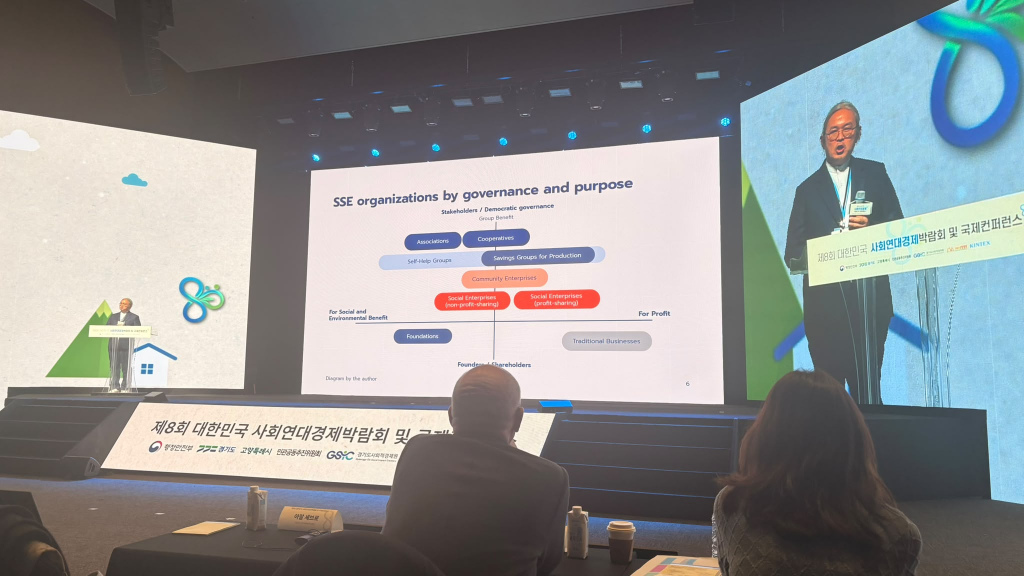
Previously, Emilio Rabasco, Director of FAMSI, delivered a keynote presentation entitled The Social and Solidarity Economy Ecosystem and International Cooperation, focusing on the importance of strengthening SSE ecosystems and cooperation between territories to advance local economic development strategies, while highlighting the central role of local authorities in promoting Local Economic Development and Social and Solidarity Economy policies.
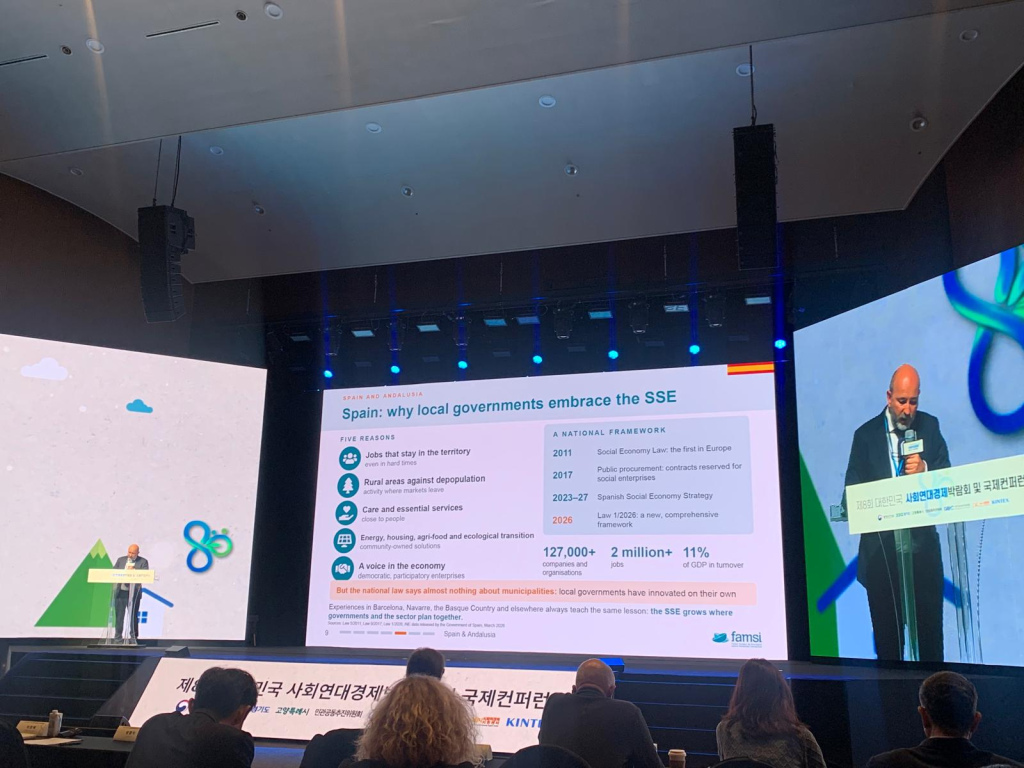
These contributions helped connect Asian experiences with broader international cooperation and networking processes, bringing together policies, tools and lessons learned that can strengthen the role of the SSE in local economic development agendas. They also build on recent advances in Korea’s SSE policy framework and contribute to the growing international momentum behind the implementation of the UN Resolution on the Social and Solidarity Economy.
The GSEF Asia Policy Dialogue 2026 strengthens the connections between the Social and Solidarity Economy and the international local economic development agenda, bringing Asia’s perspectives, experiences and priorities into the process leading up to the next World Forum on Local Economic Development (WFLED), to be held in Johannesburg, Gauteng, South Africa, from 12 to 15 October 2027.
In this context, the international dialogue provides an opportunity to build stronger partnerships across regions and continents, showcase transformative experiences and develop proposals that can inform the discussions and outcomes of the next World Forum.
The participation of FAMSI and RIPESS highlights the importance of connecting international networks and stakeholders, sharing knowledge and strengthening cooperation between territories to advance towards an economic development model that places people, communities and the sustainability of life at its heart.